
A New Lawn
Grass goes in first. It covers the most ground and holds the soil in place. Timing follows the season, since new grass on the Cape roots best in late summer and early fall.
Landscaping Cape Cod yards takes more than cutting grass. Sandy soil drains fast, salt air burns tender plants, and new grass has a short window to root before winter. Blueberry Landscaping is a local crew based in East Falmouth. We plant new yards, mow lawns, clear fall leaves and trim trees and shrubs for homeowners in 11 towns on the Upper, Mid and Lower Cape.
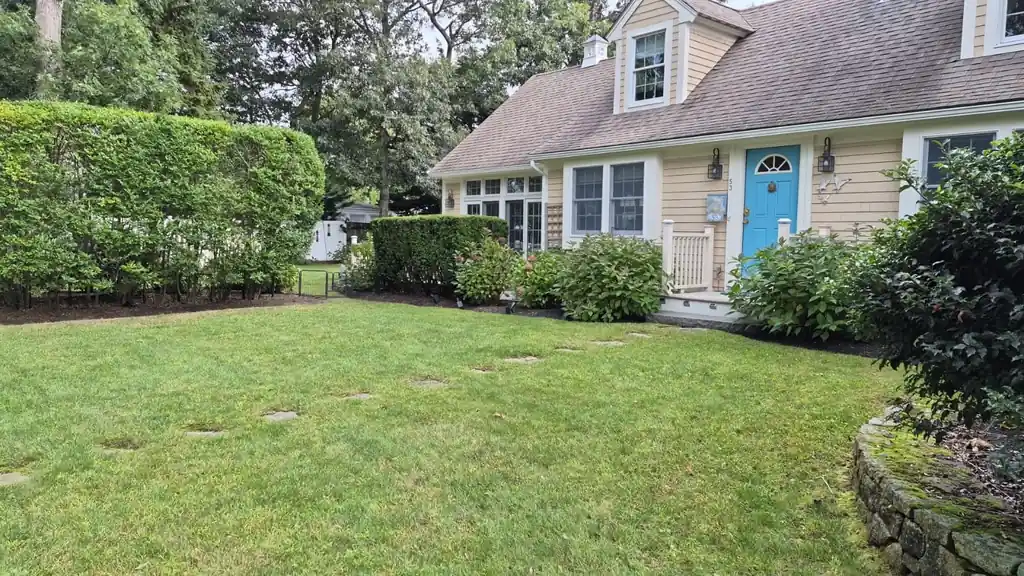
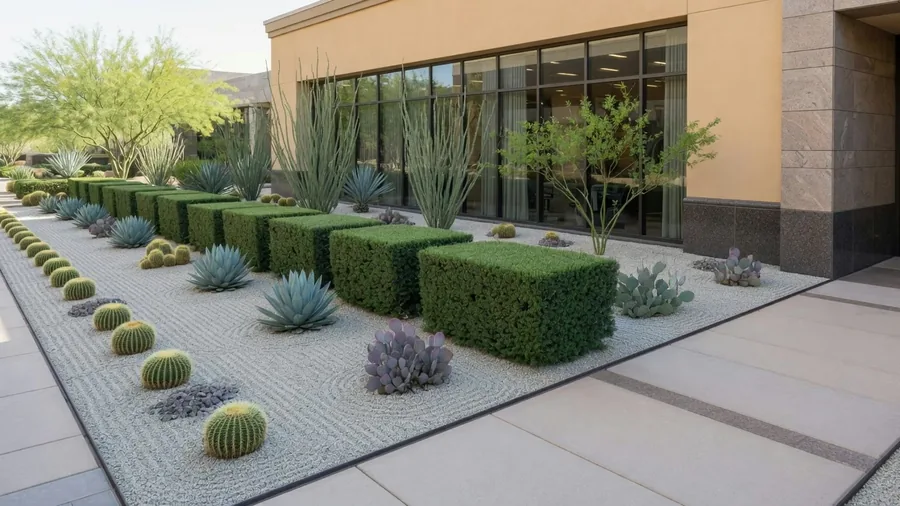
A front lawn and hedge line kept trimmed through the growing season.
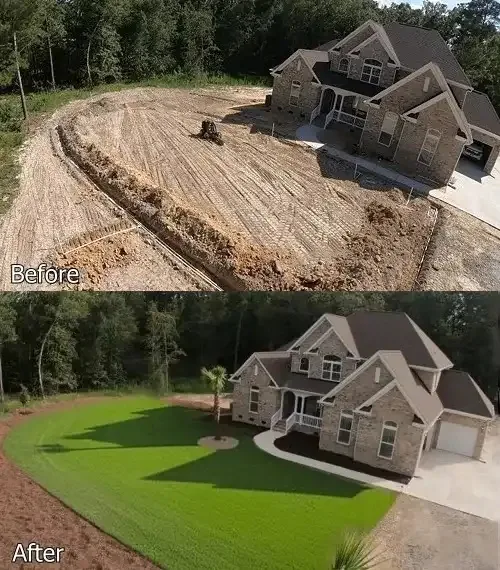
A new build often comes with a finished house and a yard of bare, compacted fill. The lawn, trees and walkways are left for the owner to sort out. Turning that empty lot into a finished yard is the work we focus on.
Grass goes in first. It covers the most ground and holds the soil in place. Timing follows the season, since new grass on the Cape roots best in late summer and early fall.
Next come the trees and shrubs that frame the house: shade, privacy along the property line and foundation plantings that soften a new facade. Species that handle wind, salt air and sandy soil last longer here.
Many new lots have no path from the driveway to the front door. A walkway keeps foot traffic off the new lawn and gives the yard a clean line.
A new yard needs the most care in its first seasons. The crew that planted it can keep it mowed, trimmed and clear of leaves with our regular yard services.
We also take single jobs and ongoing care for yards that are already established.
Regular mowing through the growing season, on a schedule set with you. The rule of thumb is to remove no more than one-third of the blade per cut (University of Illinois Extension), which keeps grass thicker and crowds out weeds.
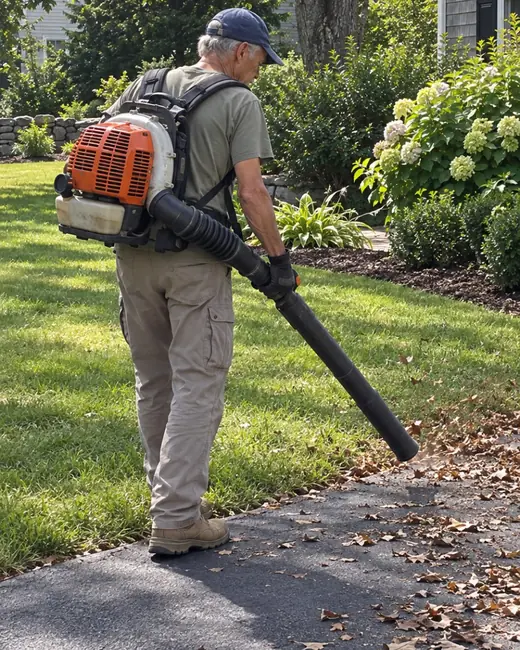
Fall cleanups that clear leaves from lawns and beds before they mat down over the grass. Leaves and yard waste are banned from Massachusetts household trash (MassDEP).
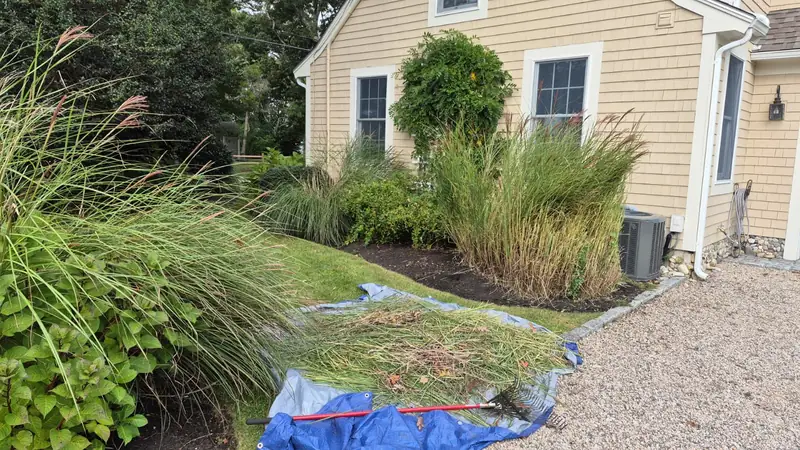
Shaping hedges, foundation shrubs and ornamental grasses so they stay full and tidy, and off windows, walkways and siding.
Pruning low or overgrown limbs and cutting trees on your property. Trees on the public way are different: in Massachusetts, public shade trees fall under the town tree warden (Mass.gov).
New lawn areas, bare-patch repair and new trees, for new builds and for older yards that need a fresh start.
Walkways and sidewalks that connect the driveway, front door and backyard. Before digging, Massachusetts requires a call to Dig Safe at 811 at least 72 hours ahead, not counting weekends and holidays (Dig Safe).
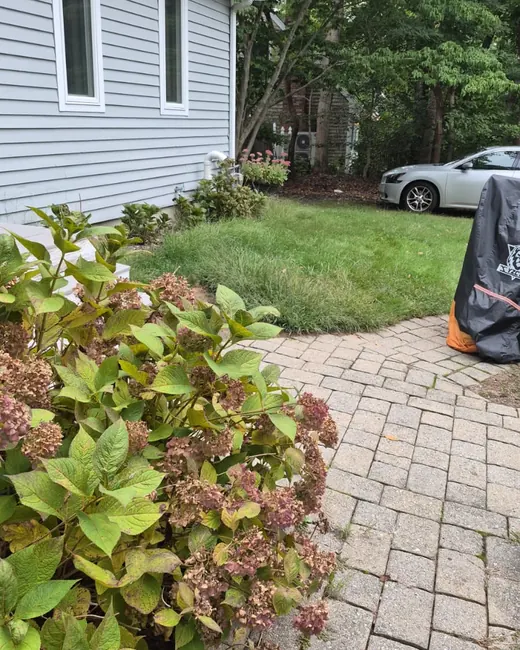
Sandy, coarse soil is the first thing to plan around when landscaping Cape Cod yards. Water and nutrients pass through it quickly, so new grass and fresh plantings need steady moisture until their roots reach deeper.
Near the water, wind carries salt spray that browns leaves and stunts sensitive plants. UMass Extension publishes a list of trees and shrubs for coastal yards, chosen for coarse soil, wind and salt spray. It's a useful starting point when landscaping Cape Cod properties close to the shore.
UMass Extension puts the best seeding window for most of Massachusetts at roughly the third week of August to the third week of September, and the Cape can often stretch it a little later (UMass Extension). Spring seeding works, but weeds, heat and summer drought make it harder.
Cleanup after winter, the first mowings, shrub shaping and new plantings once the ground thaws. April and May are the busiest months for landscaping Cape Cod yards, so it pays to book early.
Steady mowing and trimming while grass grows fastest. Sandy soil dries out in July and August, so mowing height and watering habits matter more.
Leaf cleanup, cutting back perennials and grasses, and new lawn seeding in the late summer window. In Falmouth, residents with the annual town sticker can bring leaves, grass and hedge trimmings to the Yard Waste & Leaf Compost Facility. Branches, wood and stumps are not accepted there.
Call (508) 524-9290 or send the estimate form with your address, what you need and a few photos of the yard.
You get the scope and price before any work starts. Materials, haul-away and scheduling are confirmed in the estimate.
Follow-up mowing, trimming or cleanups can be booked with the same crew.
We work in 11 towns, from our base in East Falmouth out to the Lower Cape:
Not sure your street is covered? Call (508) 524-9290 and ask.
Tell us about your yard, whether it's a new build that needs a lawn or an established yard that needs regular care, and we'll reply with a free estimate. Photos help us quote faster.
For landscaping Cape Cod yards, it depends on yard size, how much planting and soil work it needs, materials and access. We give a free estimate with the price set before any work starts.
Often not, or only partly. Many new homes come with rough-graded soil and little else, so the lawn, trees, shrubs and walkways fall to the owner. Check your builder contract, then ask us to quote the rest.
Sod gives you a green lawn right away but costs more and needs daily watering while it roots. Seed costs less and takes a few weeks to fill in. On the Cape, seed does best in late summer, while the soil is still warm.
UMass Extension recommends roughly the third week of August to the third week of September for most of the state. The Cape's milder fall often allows a little extra time. Spring seeding is possible but less reliable.
Keep newly seeded areas consistently moist until an even stand of grass comes in, usually with light watering every day, and more in hot or windy weather. Once established, about one inch of water a week is enough.
Often enough that each cut removes no more than one-third of the blade. In spring and early summer that usually means weekly; growth slows in midsummer heat and again in late fall.
It depends on yard size, how many trees drop leaves on it and how much has piled up in beds and corners. We quote it for free before the work starts.
Ready for a yard that looks finished?